
Monmouth County Previous Residents Sources
Different records answer different parts of a past-address question. The Monmouth County Clerk's Open Public Records Search System, or OPRS, is the modern recorded-document starting point. Older deeds, historic maps, library directories, archive holdings, and census releases bridge beyond its published online ranges. The table keeps ownership documents separate from household sources, because a name on a deed and a name in a directory are not the same type of evidence.
| Source | Years | Where Held | What It Shows |
|---|---|---|---|
| OPRS deed index | 1970-present | Monmouth County Clerk OPRS | Transfer parties, document date, book or page, and image when available |
| OPRS mortgage index | 1976-present | Monmouth County Clerk OPRS | Mortgagor, lender, amount, and property identifiers |
| Historical deeds | 1660s-1900 | County Archives, State Archives, and FamilySearch routes | Earlier chain, legal descriptions, and parties |
| Red Bank city directories | 1938-1981 | Red Bank Local History Room and DigiFind-It | Address-to-occupant and name-to-address clues |
| Federal and state census | Federal release rule; state 1855-1915 | Archives and library databases | Household composition, residence, age, and occupation |
| MCHA fire-insurance records | 1885-1928, western county | MCHA Research Library | Building and owner or occupant clues |
Begin with the most recent confirmed deed when the question is about ownership. Begin with the closest available directory or census when the question is about a household. Then join the two trails through the parcel's legal description and a date. An online image is useful for research, but a certified copy must come from the County Clerk.
Review the OPRS land-record help before opening a recorded-document search.
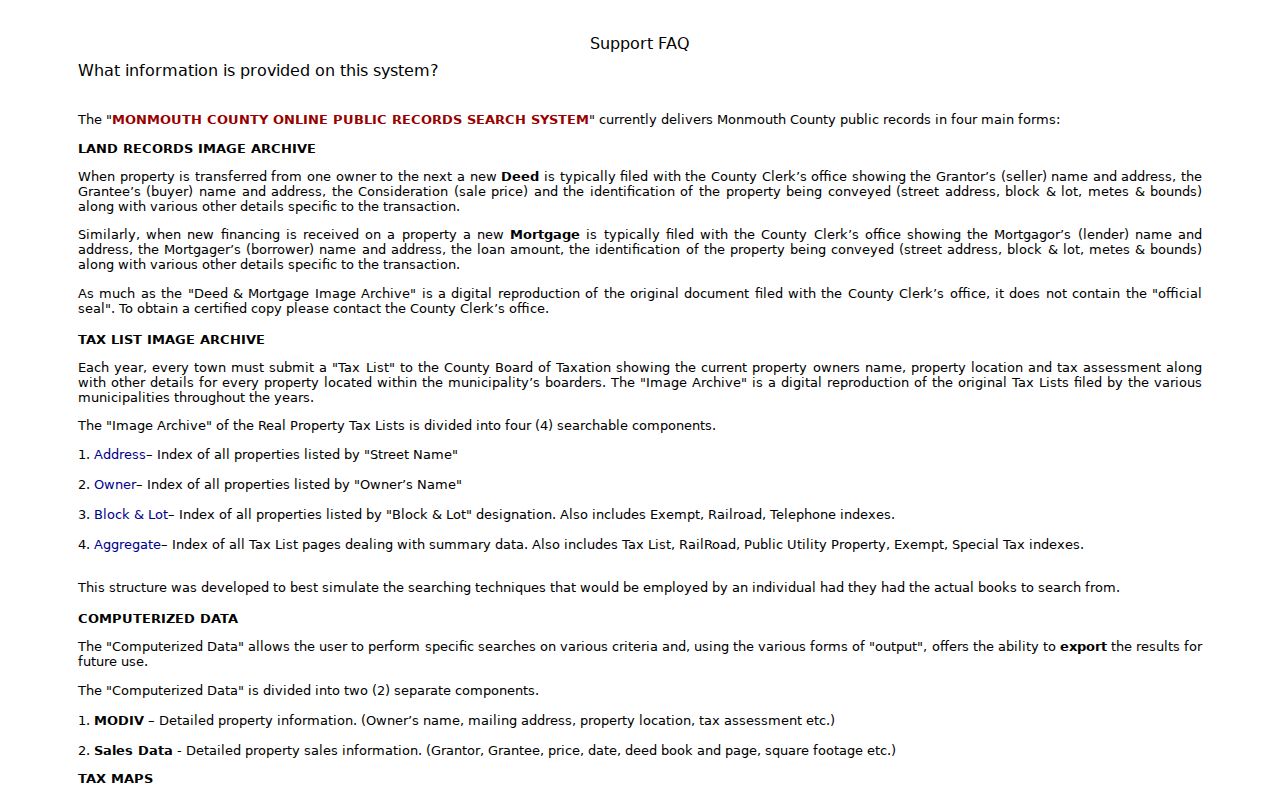
The help materials distinguish recorded-document research, property data, images, and official-copy needs, which keeps a past-residents search from relying on one screen alone.
Note: A current property record gives a starting parcel, but it cannot establish every person who lived there at an earlier time.
Monmouth County OPRS Starts the Trail
Important limitation. An online result is not a complete title search. OPRS expressly treats its title information as informational and says title work must be done in person at the County Clerk's office. Use the portal to identify a likely document, then check the legal description, prior references, municipality, and recording details. Do not assume the 1970 electronic deed boundary is the first year a Monmouth County deed was recorded. Earlier material exists through archival, microfilm, and FamilySearch routes.
The published OPRS ranges are deeds from January 1, 1970, mortgages from January 1, 1976, and other published records from October 1, 1996. IRS liens, withdrawals, and releases begin in 2010. When the web index ends, move to County Archives, the New Jersey State Archives, or the applicable FamilySearch collection instead of declaring the chain closed.
Use the OPRS basic and advanced search instructions to compare search paths.
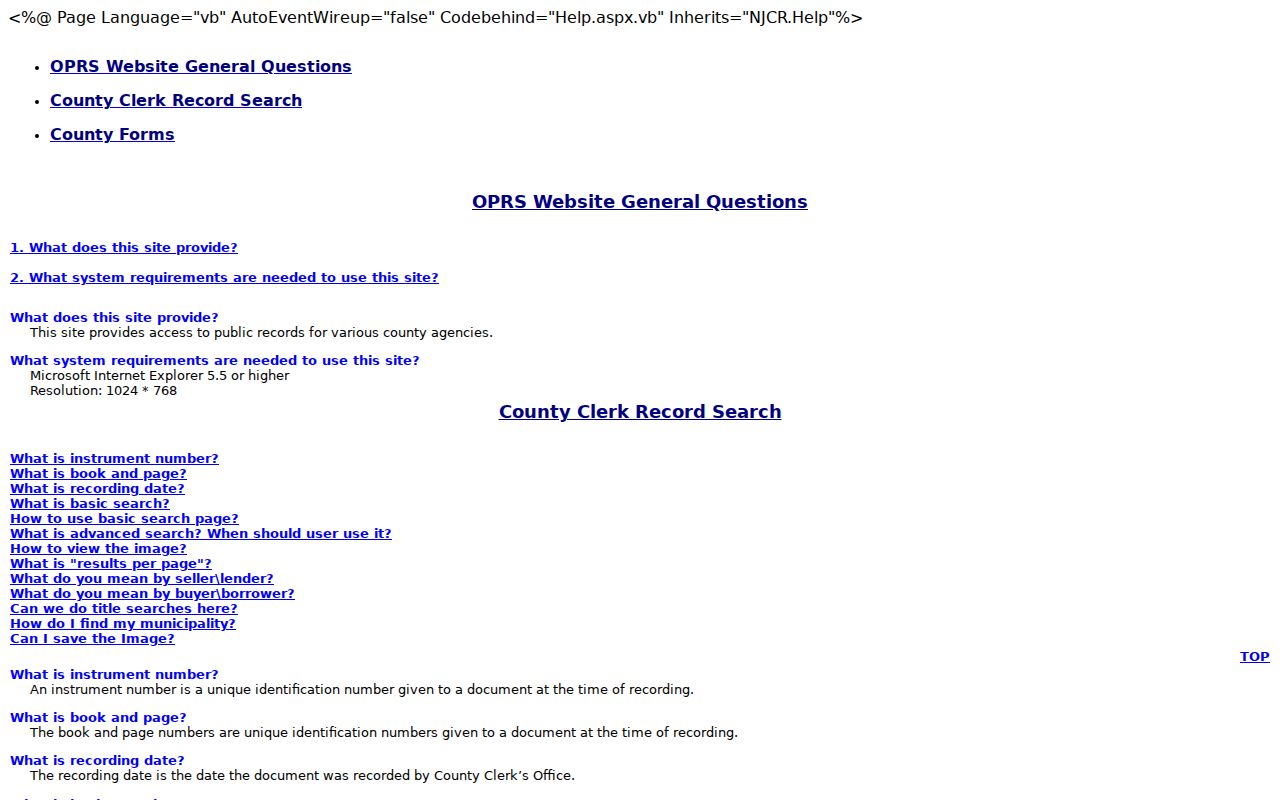
The instructions support name, document, and property-oriented research, but every candidate match still needs the parcel identifiers and document image checked.
Note: A digital reproduction is not an official seal, and a research result should be verified with the Clerk when a certified record is needed.
Trace the Monmouth County Deed Chain
Build the backward chain from a modern situs address, meaning the physical parcel location. In the OPRS Consolidated Property Search, capture the township, current owner, mailing address, situs, block, lot, qualifier, tax-map reference, and any sales or deed reference. Search the current owner as a grantee, the buyer named in a recorded document. Once the purchase deed is found, its grantor is the seller from the earlier link.
- Search the modern address in the consolidated property tool and save its township plus block, lot, qualifier, and tax-map reference.
- Find the likely purchase deed in OPRS by current owner, municipality, and date range, then compare the legal description.
- Record the seller, recording date, document type, book or page, and all prior references shown on that deed.
- Search that seller as a grantee in an earlier period, using the same parcel identifiers and legal description to reject similar names.
- Repeat backward until the online index or readable images stop, then continue through archive, microfilm, or FamilySearch deed routes.
| Grantor | The party transferring an interest in the recorded document, usually the seller in a purchase deed. |
|---|---|
| Grantee | The party receiving the interest, usually the buyer. Searching the prior owner as a grantee can reveal an earlier purchase. |
| Chain of title | The documented sequence of transfers for one parcel, tested link by link rather than inferred from a name alone. |
| Legal description | The parcel's recorded identifying language, such as block and lot or metes and bounds. It is stronger than a street label when addresses change. |
Monmouth County Address Changes
Street addresses are convenient labels, not permanent parcel identities. A lot can split, merge, change number, or appear under a different locality label. Use block, lot, qualifier, metes and bounds, tax maps, acreage, adjacent owners, and prior book or page references to bridge the gap. Compare tax maps by year and municipality before matching an old directory street line to a modern parcel.
No official countywide chronology of street renumbering or renaming was located. That is an important limit, not a reason to guess. Ask the municipal clerk, consult municipal tax maps, and check local-historian files before asserting that an older number is today's address. Freehold may also appear in older records as Monmouth Courthouse, while shore neighborhoods and postal labels can differ from a legal municipality.
For current address-keyed parcel research, the Monmouth County by-street directory has the separate property and map workflow.
Past Monmouth County Households
Ownership is only one layer of the past-residents trail. Red Bank directories from 1938 through 1981 can run from an address to a listed household or from a name to an address. New Jersey Historical Society material adds listed Monmouth runs beginning in 1875 and Long Branch runs beginning in 1883. These are discontinuous series. Their collections, publishers, and entry conventions are covered in the Monmouth County city directories.
Pair the nearest directory year with a released federal census and, for earlier New Jersey research, the state censuses from 1855 through 1915. The 1875 Monmouth census is available through county archives. A census and a directory have different dates and collection methods, so a match supports a timeline but does not erase a conflicting record.
- Find the address in the closest surviving directory year and save the page, street sequence, and all printed notations.
- Move to the next available issue, noting that the local run may skip years.
- Match the address or locality to the closest released census, preserving the enumeration year separately from publication year.
- Use an obituary, probate file, church record, cemetery transcription, or recorded deed to test a move, death, inheritance, or sale.
Use the New Jersey vital-record forms index only when the needed record and the requester's eligibility fit the state rules.
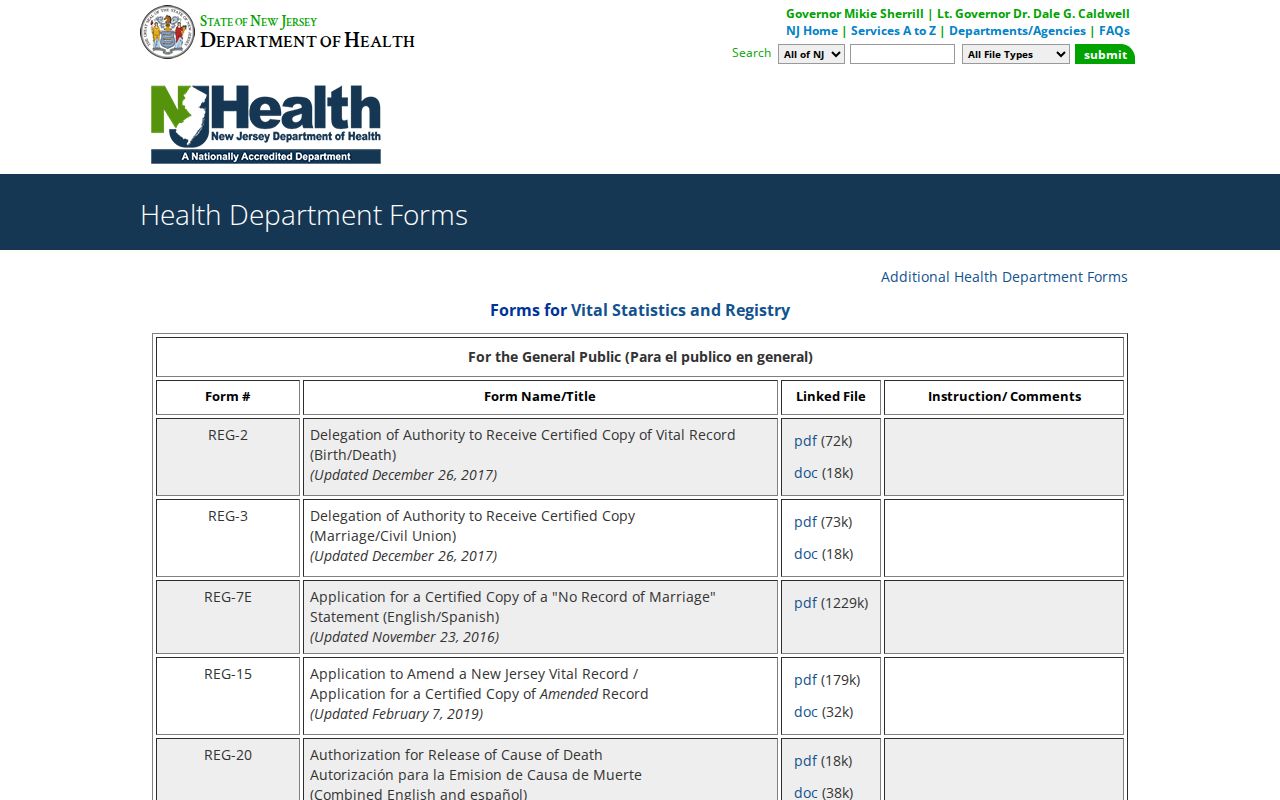
The forms index is an official request route, not a substitute for the eligibility, relationship, identification, and record-date requirements that apply to current vital copies.
Note: Current vital-record access may be limited even when an older directory or obituary identifies a date or family member.
Monmouth County Maps and Fire Records
Some past-residents questions need a building clue as well as a person clue. Red Bank DigiFind-It includes Sanborn maps for 1908 and 1914. They can help compare a structure's footprint, use, or block context near a directory date. They do not prove a person's residence. For western Monmouth County, the MCHA Research Library also holds fire-insurance records from 1885 through 1928, a narrow but valuable property-history layer.
MCHA's related holdings include tax ratables from 1778 through 1820, deeds and conveyance abstracts, directories, and genealogy materials. Its paid specific search is $10 for up to five digital or printed records. Broader genealogy research is $35 per hour and is quoted before work begins. The county library Historical Room and Red Bank Local History Room are on-site alternatives for directories, maps, and newspaper research.
Note: Collection-level coverage does not confirm that a particular street appears, so give the repository the municipality, address, parcel clues, and date range.
Monmouth County Estate Endpoints
An obituary can place someone at an address, name relatives, and point to a church or funeral record. Estate material can connect a deceased owner with administrators, heirs, purchasers, debts, and property divisions. The Monmouth County Surrogate's computerized public estate index begins around mid-1991; earlier estate indexing and papers have separate historical routes. Verify an obituary lead with a Surrogate, archive, or court copy rather than relying on a notice alone.
The Monmouth County estate-record collection is a historical-records entry point.
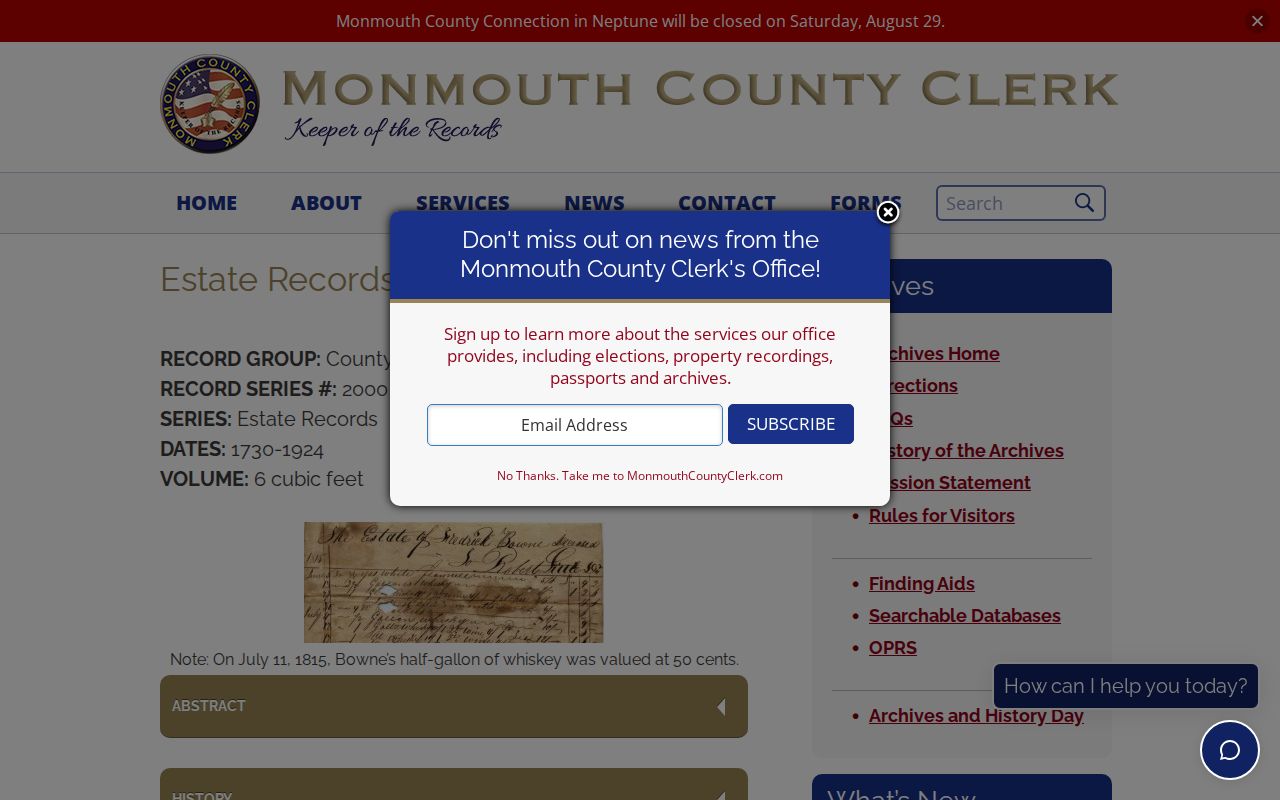
The collection description is a useful reminder that estate research has dates, finding aids, and separate access steps rather than one universal online result.
Monmouth County Records Survived Fires
Courthouse fires in 1727, 1855, 1873, and 1930, followed by the 1954 move to the current courthouse site, explain why a past-residents search can change repositories midstream. Most vital records were reported saved after the 1855 fire, but that does not establish an unbroken record series for every address. County government also stopped from December 1776 through March 1777 during Loyalist insurrections, making record reconstruction a local research issue.
When one index fails, compare County Clerk, County Archives, Surrogate, municipal, library, MCHA, and State Archives descriptions. Archive finding aids and reconstructed indexes are evidence of how the series was preserved, not optional extras.
Monmouth County Historical Fallbacks
When OPRS reaches its online boundary, use the historical route that matches the record. State Archives collections include deeds, mortgages, censuses, naturalization, and other genealogical series. County archives retain historical marriage returns and special record groups. FamilySearch has digitized county deeds and county mortgages from 1766 through 1850, although image access can vary. MCHA holds church, Bible, cemetery, obituary, and surname resources that can help place a household between deeds.
These sources should be searched by place, record type, and date. Search both a municipality and a locality name, especially for Fort Monmouth, Fort Hancock, West End, Elberon, and historic Monmouth Courthouse. A record's locality label needs to be checked against its legal description and date.
Note: Keep the repository name and record date with each result so a later search can repeat the same source route.
Respect Past Monmouth County Residents
Previous residents research works best as house history, family history, estate research, or civic curiosity. A property record, old directory, or obituary can be incomplete, out of date, or protected by a confidentiality rule. New Jersey's Address Confidentiality Program and Daniel's Law can limit public address visibility. A missing name or address is not permission to seek it through private or intrusive means.
Lawful use. Use Monmouth County past-residents records for legitimate personal research, and never use a record trail to stalk, harass, or harm a living person.